Kissing bugs have not been confirmed in Michigan. MSU entomologist Howard Russell stated in 2019 that no specimen has ever been found in the state and no locally acquired Chagas cases have been reported. The CDC has confirmed triatomines in 32 states, but Michigan is not among them. Here’s what the insect actually looks like and what Michigan bugs get mistaken for it.
Key Takeaways
- No kissing bug has ever been confirmed in Michigan, and no locally acquired Chagas disease cases have been reported here.
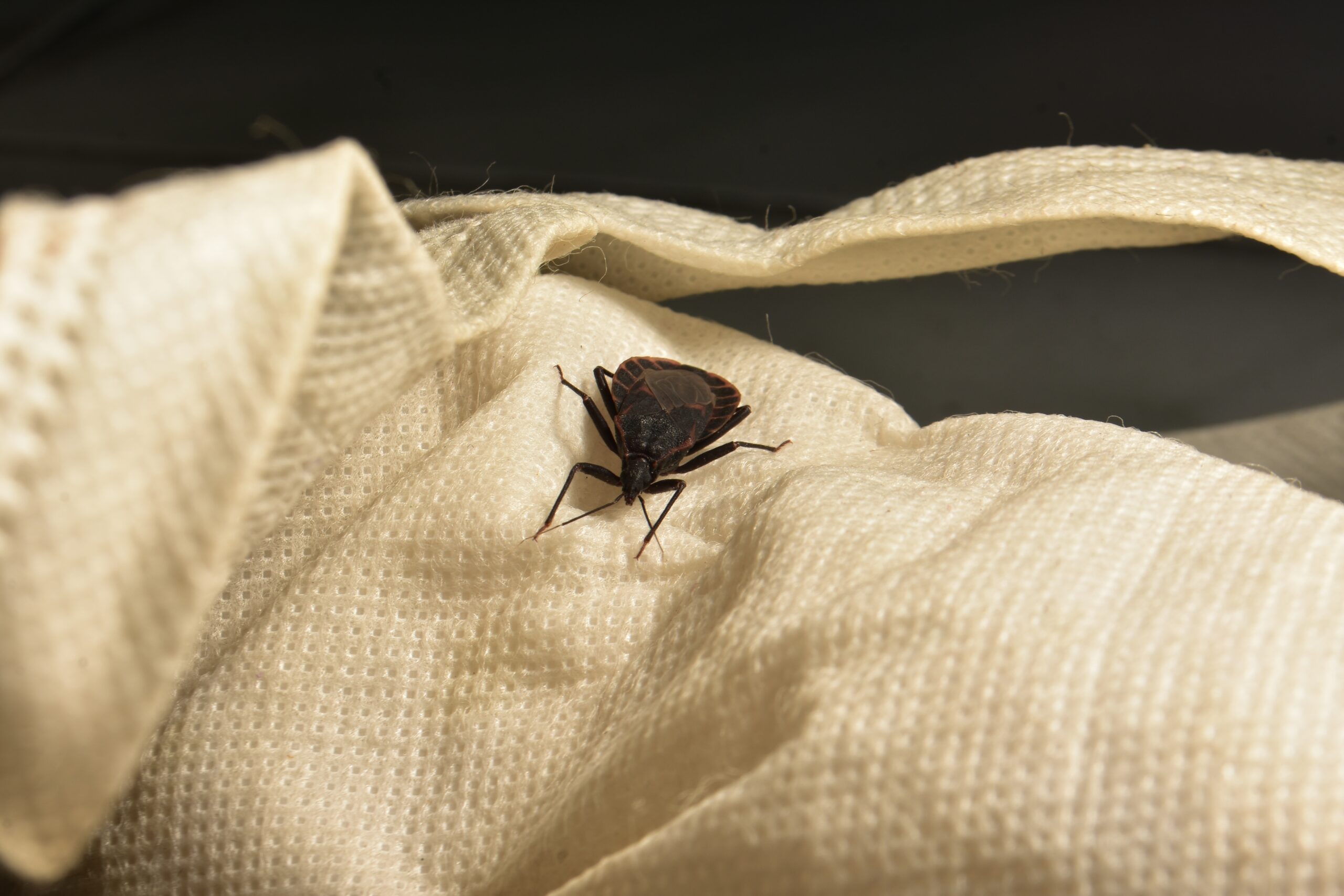
- Kissing bugs have a cone-shaped head, flat dark body, and orange or red banding along the abdomen edges. Several common Michigan insects match that description at a glance.
- Chagas disease transmits through feces, not the bite. Infection requires fecal matter to contact broken skin or mucous membranes, making transmission in Michigan extremely unlikely.
What a Kissing Bug Actually Looks Like
Misidentification is the most common source of kissing bug alarm in Michigan, and it almost always involves one of two native insects that share surface-level features. The table below covers the physical details that confirm a genuine triatomine.
The Physical Features That Confirm a Kissing Bug
| Feature | What to Look For |
|---|---|
| Size | Roughly 1/2 to 1 inch long |
| Body shape | Oval and flattened from top to bottom |
| Head | Distinctly cone-shaped, narrowing toward the front |
| Color | Dark brown to black |
| Abdomen markings | Alternating orange or red and black banding along the outer edges, visible from above |
| Wings | Present in adults, folded flat against the body |
The orange-red abdominal banding is the fastest single identifier at a distance. No common Michigan insect combines a cone-shaped head with that specific banding pattern.
The Michigan Insects Most Often Mistaken for Kissing Bugs
Kissing bug lookalikes, sorted by what to do
No kissing bug has ever been confirmed in Michigan, but two native insects get mistaken for one every fall. Here is how to tell them apart and what each one actually calls for.
Kissing Bug (Triatomine)
Not confirmed hereCone-shaped head, flat oval body roughly 1/2 to 1 inch long, dark brown to black with alternating orange or red and black banding along the abdomen edges.
Where Established in the southern and southwestern U.S.; no specimen has ever been confirmed in Michigan.
Western Conifer Seed Bug
Fall invaderSmaller and brownish with a flattened appearance, but no cone-shaped head and no orange banding.
Where Becomes common in Michigan homes in fall as it seeks winter shelter.
Wheel Bug
Mistaken IDLarge dark gray assassin bug with a distinctive cogwheel crest on its thorax; lacks the orange abdominal banding of a kissing bug.
Where Common throughout Michigan.
The wheel bug and the western conifer seed bug are the two insects most frequently misidentified as kissing bugs by Michigan residents.
The wheel bug is a large assassin bug with a distinctive cogwheel crest on its thorax. It is dark gray rather than dark brown, lacks the orange abdominal banding of a kissing bug, and that cogwheel crest is impossible to miss once you know to look for it. Wheel bugs are common throughout Michigan and are sometimes alarming to encounter given their size, but they are not triatomines.
The western conifer seed bug is smaller, brownish, and has a flattened appearance that can resemble a kissing bug at a quick glance. It lacks the cone-shaped head and the orange abdominal banding. It becomes common in Michigan homes in fall as it seeks winter shelter, which is exactly the time of year that kissing bug concerns tend to spike online.
What to Do if You Find an Insect You Think Is a Kissing Bug
If you find an insect in Michigan that you believe could be a kissing bug, do not crush it. Photograph it from a safe distance and either submit it to your local MSU Extension office or contact a pest professional for identification. The CDC also maintains a kissing bug reporting program that accepts photos and specimens.
Finding an insect with orange abdominal banding in Michigan is almost certainly a wheel bug or another native species, but professional identification is the correct response rather than assuming.
The Climate and Conditions That Keep Kissing Bugs Out of Michigan
Kissing bugs are established in the southern and southwestern United States, where the climate, housing conditions, and wildlife hosts that support triatomine populations are consistently present. Michigan’s winters are not hospitable to triatomine survival or establishment. The species that have spread northward in recent years have done so along the Gulf Coast and into states like Missouri and Tennessee, not into the upper Midwest.
The CDC’s 2025 assessment confirmed triatomines in 32 states and locally acquired human Chagas cases in 8, all of them in the South. Ohio, directly south of Michigan, has historical records of triatomine presence, and even there the risk to residents is considered low, which makes Michigan’s risk lower still.
Chagas Disease: What It Is and Why Michigan Residents Face Minimal Risk
Chagas disease is caused by the parasite Trypanosoma cruzi, carried by infected triatomine bugs. Understanding the transmission pathway explains why a kissing bug sighting, even in areas where the insect is established, does not automatically mean disease risk.
The Transmission Pathway Is Specific
The bug does not transmit the parasite through its bite. Transmission occurs when the bug defecates on or near the bite site, and infected feces then enters the body through broken skin, the eyes, or the mouth, typically when a sleeping person scratches or rubs the bite area. This specific sequence is why transmission rates are far lower than the insect’s reputation suggests, even in the southern U.S. where the bugs are well-established.
Most U.S. Cases Were Acquired Elsewhere
The CDC estimates around 300,000 people in the U.S. are living with Chagas disease, but the vast majority were infected in Latin America. Locally acquired cases do occur and are increasing in recognition, but they remain concentrated in Texas and a few southern states, not in Michigan or the upper Midwest.
When to Call Pest Pros of Michigan
Call us when you have found an insect you cannot identify with certainty, particularly one with orange abdominal banding, a cone-shaped head, or a flat body, and you want a professional answer rather than an online guess. In Michigan, the value of a professional identification is usually confirming what something is not, and that confirmation is worth having before reacting.
Professional service makes sense when:
- You have found an insect that matches the kissing bug description and want a confirmed identification.
- You want to know whether what you found is a wheel bug, seed bug, or another Michigan native.
- You are finding dark, flat-bodied insects repeatedly inside your home and want to know what species is entering and why.
- You want a professional assessment of gaps or harborage conditions that may be allowing insects in.
Pest Pros of Michigan provides pest identification and control services for homes and businesses across Michigan, including help identifying unfamiliar insects before deciding whether any treatment is needed.
Schedule an Identification Inspection in Michigan
If you have found an insect you cannot identify and want a clear answer, we can confirm the species and let you know whether anything further needs to be done.
Contact Pest Pros of Michigan to request an inspection.
Frequently Asked Questions
Have kissing bugs ever been found in Michigan?
No confirmed specimens have been documented in Michigan. MSU entomologist Howard Russell stated in 2019 that no kissing bug had ever been found in the state and that no cases of Chagas disease acquired in Michigan have been reported. The CDC’s confirmed triatomine range currently covers 32 states, but Michigan is not among them.
What Michigan insects are most often mistaken for kissing bugs?
The wheel bug and the western conifer seed bug are the most frequent Michigan lookalikes. The wheel bug is large, dark gray, and has a cogwheel crest on its back. The western conifer seed bug is smaller and brownish, and enters homes in fall. Neither has the cone-shaped head or orange-red abdominal banding of a true kissing bug.
If Chagas disease is in 32 states, should Michigan residents be concerned?
The CDC’s confirmed states are concentrated in the South and Southwest. Michigan’s climate does not support established triatomine populations, and no locally acquired human cases have been reported in the state. The risk level for Michigan residents is extremely low based on current evidence.
Can my dog get Chagas disease in Michigan?
Chagas disease in dogs is documented primarily in Texas, where it has been a reportable condition in animals. In Michigan, the absence of an established triatomine population means there is no documented route of transmission to pets. If you travel with pets to areas of the South where kissing bugs are established, consult your veterinarian about precautions.

 Serving Michigan since 2018
 Pest-free guarantee
 Small, local business