Small moths or beetles in dry food can spread through a cabinet faster than most homeowners expect. In Kalamazoo kitchens, these stored-food pests often arrive inside flour, rice, cereal, pasta, pet food, birdseed, spices, nuts, dried fruit, or other shelf-stable products.
The first step is to find the source. Traps may catch adults, but they will not fix an infested bag of flour, crumbs in shelf seams, or larvae hidden in packaging. A careful cleanout, better storage, and inspection can help stop the issue from returning.
Key Takeaways
- Stored-food pests often arrive inside packaged dry goods.
- Flour, cereal, rice, pasta, pet food, and birdseed should be checked.
- Discard infested food before cleaning shelves.
- Airtight containers help prevent spread.
- Recurring activity may need professional inspection.
What Stored-Food Pests Look Like
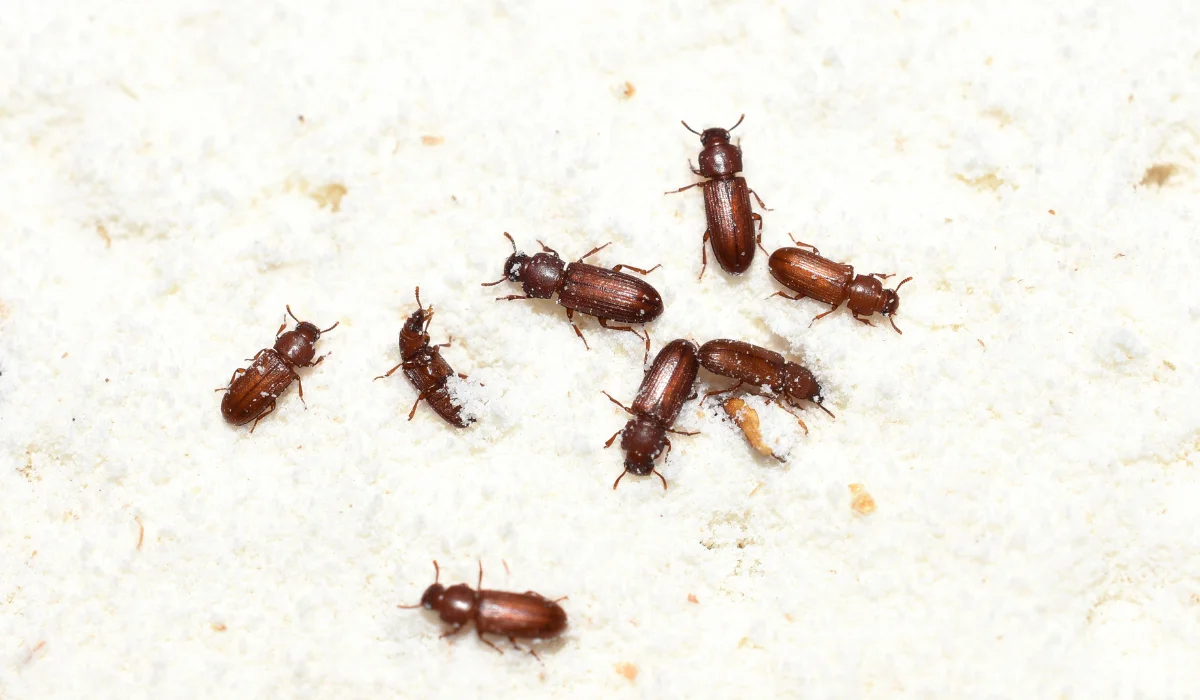
Kitchen pests that live in dry goods are usually small moths, beetles, or weevils. You may see adults crawling in food, flying near cabinets, or gathering around pantry shelves. Larvae can be harder to notice because they may stay inside the food source.
Common signs include:
- Small moths flying near cabinets
- Tiny beetles in flour, cereal, rice, or pasta
- Webbing inside packages
- Larvae in dry goods
- Holes in food packaging
- Fine debris or clumping inside stored food
- Insects around pet food or birdseed
- Activity that returns after the cabinet is wiped down
Michigan State University Extension explains that grain-based kitchen pests can infest foods such as flour, noodles, cake mixes, dry pet food, nuts, dried fruit, and spices. That is why the search should include more than one open package.
Where They Come From
Stored-food pests often come home inside a product that was already infested before it reached your kitchen. They can also spread from one open package to nearby food if items are stored in thin cardboard, paper, or loose plastic.
Check these items first:
- Flour and baking mixes
- Cereal and granola
- Rice and pasta
- Crackers and cookies
- Nuts and seeds
- Dried fruit
- Spices
- Dry pet food
- Birdseed
- Decorative dried corn or pasta crafts
A clean home can still have this issue. The problem usually starts with an infested product, then grows when the source stays in the pantry long enough for insects to spread.
How To Find The Source
Start with the oldest dry goods and any items you do not use often. Pests may hide in the back of shelves, inside folded packaging, under shelf liners, or in crumbs along cabinet seams.
Open and inspect each item carefully. Look for live insects, larvae, webbing, clumps, holes, or unusual dust. If one product is clearly infested, place it in a sealed bag before throwing it away.
Do not stop after finding one bad item. Several packages may be affected, especially if they were stored close together.
What To Throw Away
Discard any food with visible insects, larvae, webbing, or damaged packaging. If you are unsure whether an opened product is affected, it is usually safer to discard it than to keep the problem going.
Pay close attention to:
- Open flour or meal products
- Boxes with inner bags that are not sealed
- Pet food kept in original bags
- Birdseed or grass seed stored indoors
- Old spices and baking ingredients
- Bulk foods in thin plastic bags
- Food with webbing or clumps
MSU Extension recommends throwing away soiled food, emptying pantry shelves, and checking open flour, noodles, cake mixes, and dry pet food. For unopened boxes that may be questionable, MSU suggests freezing them at 0°F for four days to help kill eggs or insects.
How To Clean The Pantry
After removing affected items, clean the storage area thoroughly. The goal is to remove crumbs, eggs, larvae, and food dust from hidden spots.
Use this process:
- Empty the shelves completely.
- Vacuum shelf seams, corners, cracks, and peg holes.
- Wipe shelves with soap and water.
- Remove and replace shelf liners if pests are underneath.
- Clean nearby floors, baseboards, and cabinet edges.
- Take trash out right away.
- Wash reusable containers before refilling them.
Avoid spraying food storage areas without professional guidance. Product use around food, dishes, and pantry surfaces needs caution.
How To Store Food After Cleanup
Storage makes a major difference after cleanup. Thin grocery packaging may not stop pests from spreading from one item to another.
Use containers that seal tightly, such as:
- Glass jars
- Hard plastic containers with tight lids
- Metal tins
- Sealed bins for pet food
- Smaller containers for baking ingredients
Label containers with purchase dates when possible. Rotate older items first, and avoid keeping forgotten dry goods in the back of the pantry for long periods.
When Traps Help
Traps can help monitor adult moth activity, but they should not be the main treatment. If the food source remains, new insects can keep emerging.
Traps may be useful after cleanup to see whether activity is still present. Place them near the cabinet or shelf where you saw insects, not randomly around the kitchen. If traps continue catching insects after the pantry has been cleaned, there may be another source nearby.
Possible hidden sources include:
- Pet food
- Birdseed
- Dried flowers
- Forgotten snacks
- Bulk grains
- Spices
- Food stored in basement shelves
- Crumbs under appliances
Why Activity May Keep Coming Back
Recurring activity usually means something was missed. One unopened package, a bag of pet food, or debris in a cabinet crack can keep the issue going.
Activity may continue when:
- Infested food was not discarded.
- Old dry goods were not checked.
- Shelves were wiped but not vacuumed.
- Food was returned in original packaging.
- Pet food or birdseed was stored indoors.
- Traps were used without source removal.
- A nearby cabinet or storage area was skipped.
If the insects return after a full cleanout, a professional inspection can help locate the missed source.
How We Help Kalamazoo Homeowners
Our Kalamazoo pest control team helps homeowners identify pest activity, inspect problem areas, and recommend the right next step for the home. With stored-food pests, the source matters more than a quick spray.
We look at cabinets, pantry shelves, dry goods, pet food areas, nearby storage, and the conditions that may be helping the insects spread. We also explain how to reduce future activity with storage and cleanup steps that fit your kitchen.
Pest Pros of Michigan provides nuisance pest control services for common household pest problems, and we can help determine whether the issue is limited to stored food or connected to another pest source.
How To Prevent Future Pantry Pest Problems
Prevention is mostly about inspection, storage, and rotation. A few simple habits can reduce the chance of bringing the problem back.
Helpful steps include:
- Check flour, rice, cereal, and pet food before storing.
- Avoid buying more dry goods than you will use soon.
- Store opened food in airtight containers.
- Keep pet food and birdseed in sealed bins.
- Clean crumbs from shelves and cabinet seams.
- Rotate older products to the front.
- Inspect bulk foods before transferring them.
- Watch for moths or beetles after grocery trips.
If you see insects again, check the newest products and the oldest forgotten items first.
Schedule Pest Control In Kalamazoo
If small moths, beetles, larvae, or webbing keep showing up in your kitchen, we can inspect the area, help identify the source, and recommend the right control plan.
Contact Pest Pros of Michigan to request pest control service in Kalamazoo.
Frequently Asked Questions
What Are The Small Bugs In My Flour Or Cereal?
They may be stored-food beetles, moth larvae, or weevils. Discard infested products, check nearby dry goods, and clean shelves thoroughly before restocking.
Are Stored-Food Pests A Sign Of A Dirty Kitchen?
No. They often enter homes inside packaged dry goods. Cleanliness helps prevent spread, but even clean kitchens can have an issue if an infested item is brought home.
Should I Throw Away Everything In The Pantry?
Not always. Throw away infested food and inspect nearby items carefully. Open products near the source are more likely to be affected than sealed items stored elsewhere.
Can Freezing Help With Questionable Food?
Yes, for unopened items you are unsure about. Michigan State University Extension recommends freezing questionable unopened boxes at 0°F for four days to help kill eggs or insects.
When Should Kalamazoo Homeowners Call Pest Pros Of Michigan?
Call when insects keep returning after cleanup, you cannot find the source, pests are spreading across cabinets, or activity appears in pet food, birdseed, or multiple storage areas.

 Serving Michigan since 2018
 Pest-free guarantee
 Small, local business