Finding hornet nests in trees around your Michigan home can quickly become a concern once stinging insects start gathering near patios, walkways, sheds, or backyard play areas. Many homeowners first notice increased hornet activity before spotting the actual nest hidden in tree branches or dense summer foliage.
Baldfaced hornets, yellowjackets, paper wasps, and other stinging pests become far more active across Michigan during late spring and summer. While some nests stay high above the ground and away from daily activity, others develop close to entryways, decks, driveways, and outdoor living spaces where the risk of painful stings increases.
Understanding what attracts hornets, how to identify active nests, and when professional removal may be necessary can help you respond safely. Disturbing an active colony can trigger aggressive defensive behavior, especially later in the season when populations are larger.
This guide explains how to identify hornet nests near Michigan homes, where colonies commonly develop, the risks associated with active nests, and how Pest Pros of Michigan approaches professional hornet treatment and removal.
Key Takeaways for Hornet Nest Problems
- Hornet nests hanging near Michigan homes can increase sting risks around patios, walkways, sheds, and outdoor gathering spaces.
- Baldfaced hornets build enclosed paper nests that differ from the open comb nests created by paper wasps and mud daubers.
- Hornets and other wasps may become aggressive when they feel their colony is threatened.
- Pest Pros of Michigan provides professional hornet nest removal with targeted treatment and follow-up recommendations.
How to Identify Hornet Nests Near Michigan Homes
When stinging insects begin flying around trees near your property, identifying the species is the first step. Different wasps, bees, and hornets create different nesting structures, and proper identification helps determine the level of risk around your Michigan home.
How to Identify Different Hornet Nest Types
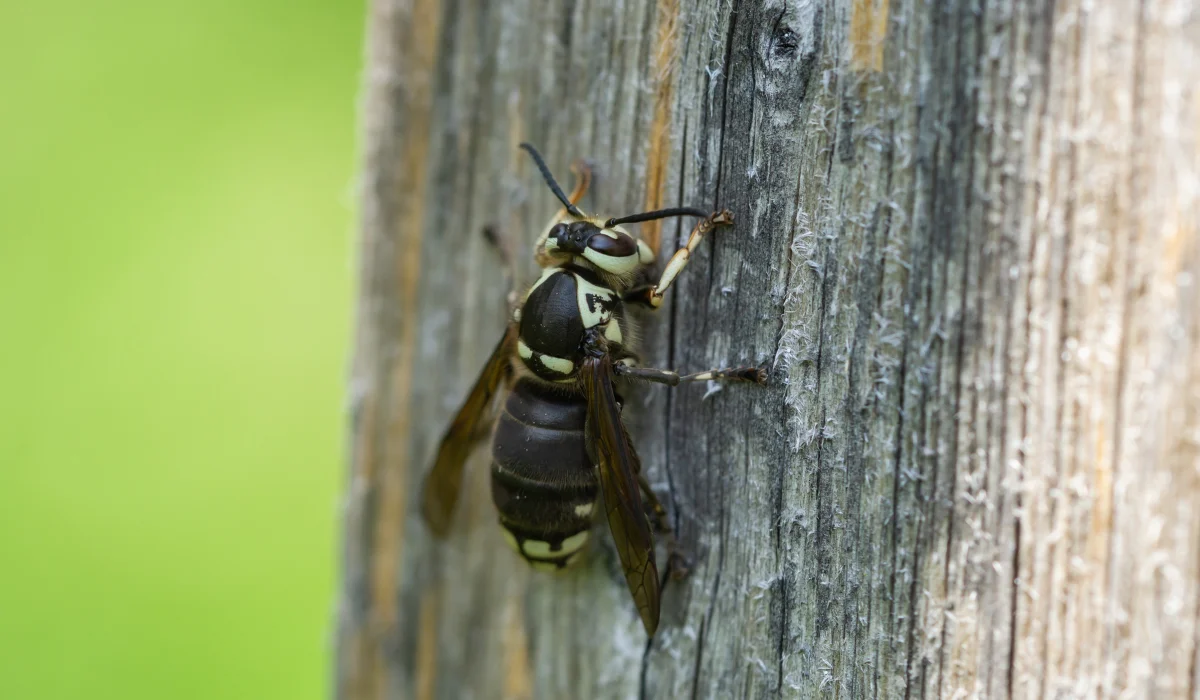
The baldfaced hornet is a black and white species commonly found throughout Michigan. These hornets build large gray paper nests suspended from trees and structures. Purdue Extension notes that enclosed nests contain multiple comb layers protected by a thick paper envelope made from chewed wood fibers mixed with saliva.
Paper wasps create smaller umbrella-shaped nests without the outer covering seen on hornet nests. Mud daubers build narrow mud tubes instead of paper structures, while some yellowjackets nest underground rather than in trees.
Because several species of wasps and hornets may nest around Michigan homes, accurate identification is important before attempting any removal.
Signs of Hornet Activity Around Your Home
Steady insect traffic moving in and out of a single branch area is often one of the first signs of hornet activity. You may notice hornets flying repeated paths between the nest and nearby food sources.
Research from the University of Minnesota Extension shows that some yellowjacket species become increasingly aggressive during late summer and fall. Aggressive flight patterns or repeated stinging behavior near outdoor areas may indicate a mature colony nearby.
Where Hornet Nests Commonly Appear
Hornet nests are often found hanging from tree limbs, dense branches, shrubs, sheds, roof overhangs, and exterior structures throughout Michigan neighborhoods. Some species may also build colonies inside wall voids, attics, or birdhouses.
Large nests hanging several feet above ground can become difficult to spot until colonies grow larger later in the season. Dense foliage common during Michigan summers may partially hide nests until hornet activity increases.
Common Entry Areas Hornets Use
Trees growing close to siding, rooflines, or attic vents can create pathways that bring hornets closer to the structure. Gaps near soffits, vents, and exterior wall openings may also allow wasps and hornets access into wall voids.
Branches touching the home should be trimmed back whenever possible. Reducing direct contact between trees and the structure can help limit future pest problems around Michigan properties.
Why Hornet Nest Problems Develop
Hornet colonies develop when food, shelter, and protected nesting areas are available near homes. Warm Michigan summers, nearby insect populations, and sheltered tree cover all contribute to increased hornet activity.
Outdoor Areas That Attract Hornets
Hornets often select trees with dense canopy cover because branches help protect the colony from wind and weather exposure. Covered areas near sheds, decks, and garages can also provide suitable nesting conditions.
Social wasps build annual colonies that expand throughout the warm season in Michigan. Most worker hornets die off after temperatures drop, while fertilized queens survive winter and establish new colonies the following year.
Food Sources That Attract Hornets
Hornets feed on flies, spiders, caterpillars, beetles, and other insects around your yard. Outdoor garbage, sugary drinks, pet food, and fallen fruit may also attract foraging hornets near patios and outdoor dining spaces.
High insect activity around gardens and plants can increase the chances of attracting hornets to nearby trees. Properties with large fly populations may also experience more wasp and hornet activity during Michigan summers.
How Hornets Move Around Nearby Trees
Hornets follow repeated flight paths between food sources and the colony. When nests are located close to homes, these flight patterns may cross sidewalks, driveways, patios, and entry points.
Some species become more defensive as colony populations increase. Vibrations from lawn equipment, tree trimming, or nearby movement may trigger defensive behavior if hornets feel threatened.
Hornet Trails and Structural Entry Points
Hornets sometimes move into wall voids, attics, or roof gaps when exterior openings are available. Trees located close to the structure may increase the likelihood of hornets exploring these protected spaces.
Inspecting siding gaps, attic vents, rooflines, and utility penetrations can help reduce the chances of hornets or other stinging pests expanding closer to living areas.
Risks From Hornet Nests Near Your House
Hornet nests near Michigan homes can create health and safety concerns when colonies become larger or more defensive. Understanding these risks helps homeowners decide when professional removal is appropriate.
Health Risks Associated With Hornet Nests
Hornets can sting multiple times when defending their colony. Disturbing a nest accidentally while mowing, trimming branches, or working near the yard may trigger an attack from multiple insects.
Stings are often painful and may cause swelling, redness, or allergic reactions. Seek medical attention immediately if difficulty breathing, dizziness, or severe swelling develops after a sting.
UC IPM explains that standard insect repellents do not provide reliable protection against aggressive wasps and hornets.
Property Concerns Linked to Hornet Activity
While hornets do not damage structures the way termites or carpenter ants do, active colonies can interfere with routine yard maintenance and outdoor activities around the property.
Tree trimming, roof repairs, pressure washing, and landscaping work may become difficult when hornets establish nests nearby. Colonies hidden several feet above ground are especially dangerous because homeowners may not notice them immediately.
Outdoor Food Areas and Hornet Activity
Hornets and wasps frequently search for food around patios, grills, garbage bins, and outdoor dining areas. Sweet drinks, exposed trash, and leftover food can attract foraging workers closer to people.
Reducing outdoor food sources and cleaning spills quickly can help reduce activity around gathering spaces during peak Michigan summer months.
When Hornet Removal Becomes Necessary
Professional hornet nest removal is often recommended when colonies are located near doors, patios, play areas, sheds, or heavily used outdoor spaces.
As Purdue Extension explains, nests located near human activity increase the likelihood of defensive stinging incidents. Monitoring activity from a safe distance helps determine whether treatment is needed.
Professional Hornet Nest Removal and Treatment
Hornet nest removal requires careful planning because colonies may respond aggressively when disturbed. Professional treatment helps reduce the risks associated with DIY removal attempts.
How to Reduce Conditions That Attract Hornets
Limiting standing food sources around the yard can help reduce hornet activity near your home. Keep garbage sealed, clean outdoor eating areas, and remove fallen fruit whenever possible.
Trimming tree branches away from siding, rooflines, and sheds can also help reduce sheltered nesting opportunities around the property.
Why Hornet Control Starts With Inspection
A professional inspection helps identify the species, colony size, nest location, and level of risk around the property. Different wasps and hornets require different treatment approaches.
Pest Pros of Michigan begins with a site evaluation to determine the safest and most effective treatment strategy. Proper identification helps avoid mistakes that could increase the chance of aggressive defensive behavior.
What Happens During Professional Hornet Treatment
Pest Pros of Michigan technicians use protective equipment and specialized treatment materials designed for hornet nest removal. Treatments may include products such as Waspfreeze or Bifen depending on the nesting location and species involved.
Nests located high in trees or difficult-to-access areas may require specialized equipment to safely treat the colony. Follow-up monitoring may also be recommended if returning hornets remain active temporarily after treatment.
What a Hornet Removal Plan Includes
Most hornet activity decreases within 24 to 48 hours after treatment, though complete colony elimination may take longer depending on nest size and returning workers.
Pest Pros of Michigan provides a one-time treatment with a three-month warranty for treated areas. Preventative pest management recommendations may also help reduce future nesting activity around the property.
Managing Hornet Nests Around Michigan Homes
Hornet nests in trees near Michigan homes deserve attention when colonies develop close to outdoor living spaces or entry points. Hornets may become aggressive when disturbed, and large colonies increase the risk of painful stings around your property.
Professional hornet nest removal helps reduce safety risks while addressing the colony with proper equipment and targeted treatment methods. If you are seeing increased hornet activity around your yard, trees, sheds, or rooflines, Pest Pros of Michigan can help identify the problem and recommend the safest next steps.
Frequently Asked Questions About Hornet Nests
Should Hornet Nest Removal Be Handled Professionally?
Professional hornet nest removal is strongly recommended when nests are located near homes, patios, sheds, or heavily used outdoor spaces. Disturbing a colony without protective equipment can trigger aggressive defensive behavior.
Will Hornets Return After Removal?
Hornets do not reuse old nests, but new queens may establish colonies in nearby areas during future seasons. Preventative inspections and reducing attractants can help lower the chances of recurring nesting activity.
When Are Hornets Most Active Around Michigan Homes?
Hornet colonies grow throughout spring and summer and usually reach peak activity during late summer and early fall in Michigan. Warmer temperatures and increased food demand often make colonies more defensive during this time.
What Should I Do After a Hornet Sting?
Wash the area with soap and water, apply a cold compress, and monitor for swelling or allergic reactions. Seek immediate medical attention if breathing problems, dizziness, or severe swelling develop after a sting.

 Serving Michigan since 2018
 Pest-free guarantee
 Small, local business
 10+ years of pest control experience
 President and CEO of Pest Pros of Michigan
 Resident of Michigan