If you’ve noticed round holes in your siding or small piles of sawdust under your deck, you may be dealing with carpenter bees. In Michigan, carpenter bees become active in early spring and can return year after year to the same wooden structures.
Unlike termites or carpenter ants, carpenter bees do not eat wood. They drill into it to create nesting sites where they lay eggs. Over time, this boring can lead to carpenter bee damage and even structural damage if ignored.
For homeowners, tenants, and commercial property managers in Ann Arbor and across Michigan, knowing how to get rid of carpenter bees safely is key.
Key Takeaways
- Carpenter bees have shiny black abdomens and create smooth, round bore holes in wood.
- Repeated boring can lead to carpenter bee damage and structural damage over time.
- DIY methods and carpenter bee traps rarely eliminate a full carpenter bee infestation.
- Professional carpenter bee control targets nesting sites without spreading unnecessary material.
- Sealing, painting, and maintaining wood surfaces helps prevent repeated activity in Michigan.
Carpenter Bee ID and Activity Signs
Correct identification matters for stinging insects like bees in Michigan. Carpenter bees are often confused with bumblebees, honey bees, or even wasps and hornets.
Shiny Black Abdomens
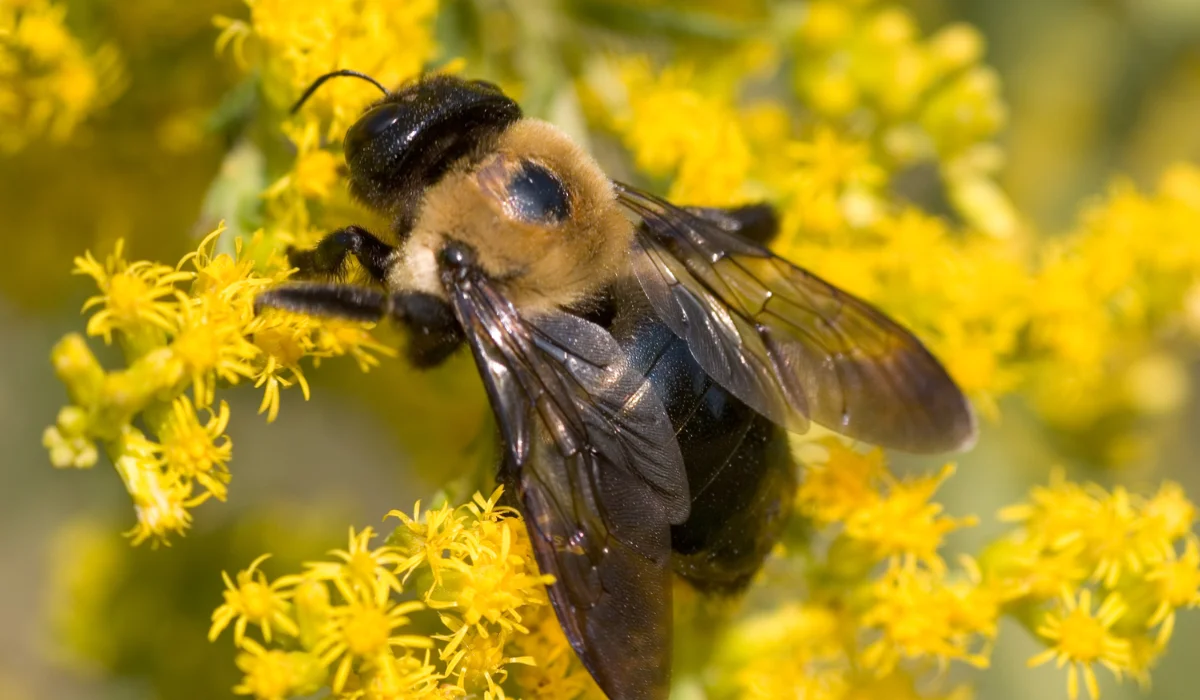
One clear sign of carpenter bees is their shiny, hairless black abdomens. Bumblebees have fuzzy abdomens, while carpenter bees have smooth, glossy abdomens. This small detail helps separate helpful pollinators from wood-boring pests.
Male carpenter bees may hover near entry points and appear aggressive, but they do not have stingers. Female carpenter bees have stingers and can sting if handled.
Perfectly Round Bore Holes
Carpenter bees create smooth, round bore holes about the size of a dime. These holes are often found in softwoods like pine, cedar, or redwood. Check eaves, fascia boards, soffits, and deck rails.
If you see multiple holes in the same area, you may have a growing carpenter bee infestation.
Sawdust and Bee Nest Activity
Below active holes, you may notice fresh sawdust or yellow staining. This comes from tunneling and waste. Inside the wood, female carpenter bees create galleries where they lay eggs and store pollen for larvae.
You may also see woodpeckers pecking at the wood. They are often searching for larvae inside the bees’ nest tunnels.
Seasonal Patterns in Michigan
In Michigan, carpenter bees emerge in early spring. They bore into wood to mate and lay eggs. By late summer, new adults may emerge, and some will overwinter inside the same tunnels. This cycle is why carpenter bee control is important before damage spreads.
Low-Damage Control Options and DIY Limits
When trying to get rid of carpenter bees, the goal is to limit harm to wood surfaces and avoid making the pest problem worse.
Targeted Treatment of Active Holes
A measured application of insecticide inside the tunnel targets adult bees and larvae without spreading material across large wood areas.
Surface spraying alone does not solve a carpenter bee problem because it cannot reach the nesting sites.
Avoid Over-Sealing Too Soon
It may seem smart to seal holes right away with caulk. However, sealing active holes before treatment can trap live bees inside. This can cause them to chew new entry points, increasing carpenter bee damage.
Proper timing is important. After treatment and confirmation of inactivity, sealing holes prevents re-entry.
Limits of Carpenter Bee Traps and DIY Methods
Carpenter bee traps may reduce numbers in a small area, but they rarely eliminate a full carpenter bee infestation. DIY methods often miss hidden tunnels and overwintering bees.
When to Call a Pro (and Why)
Some carpenter bee activity can be managed with simple prevention steps, but certain signs mean it’s time to call a professional. Watch for these situations where expert help is the safer and more effective choice:
Multiple Holes or Widespread Damage
If you see clusters of bore holes along fascia boards, soffits, or other wooden structures, the infestation may be established. Repeated boring weakens wood over time and increases the risk of structural damage.
Activity Near Living Spaces
If carpenter bees are boring near entry points, balconies, or seating areas, the risk increases. While male carpenter bees cannot sting, female carpenter bees can. No one wants stinging insects near doors or walkways.
Professional carpenter bee control services can confirm the species and rule out other pests, such as wasp nests, carpenter ants, or termites.
Ongoing Seasonal Return
If carpenter bees return each spring in Ann Arbor or other Michigan communities, you likely have untreated tunnels where bees overwinter. A recurring pest control service can help manage repeat activity before it becomes a larger pest problem.
Repair and Prevention to Stop Re-Boring
After treating for carpenter bees, it’s important to take follow-up steps to protect your home and prevent new activity. Once the bees are gone, focus on repairing and sealing the areas they used. Here’s how:
Seal and Fill Treated Holes
Once treatment is complete and activity has stopped, fill bore holes with wood filler or caulk. This blocks access and discourages reuse.
Paint or Seal Exposed Wood
Carpenter bees prefer unfinished or stained wood. Painting or sealing wood surfaces creates a barrier that makes nesting sites less attractive. Pay attention to eaves, fascia boards, and soffits.
Replace Severely Damaged Boards
If carpenter bee damage is extensive, replacing boards may be necessary. Damaged wooden structures can attract other pests, including termites or additional stinging insects.
Prevention is more cost-effective than repeated repairs.
Book Carpenter Bee Control in Michigan
If you need to get rid of carpenter bees, Pest Pros of Michigan provides targeted carpenter bee control as part of our pest control services. We begin with a free quote and inspection to confirm the pest and assess damage.
If you are dealing with a carpenter bee problem, contact us to schedule service and protect your property before the next season begins.
FAQs
How do I tell the difference between carpenter bees and bumblebees?
Carpenter bees have shiny black abdomens, while bumblebees are fuzzy. Carpenter bees drill round bore holes into wood. Bumblebees usually nest in the ground.
Are carpenter bees as destructive as termites?
Carpenter bees do not eat wood like termites, but repeated tunneling can weaken wooden structures over time. Long-term activity increases the risk of structural damage.
Will carpenter bees come back next year?
Yes. Carpenter bees often overwinter inside old tunnels and return in early spring. Proper carpenter bee control and sealing treated holes helps reduce repeat infestations in Michigan.

 Serving Michigan since 2018
 Pest-free guarantee
 Small, local business
 10+ years of pest control experience
 President and CEO of Pest Pros of Michigan
 Resident of Michigan