Seeing flying ants inside your home can be alarming. One day, everything looks normal. Next, you notice swarms of flying ants near windows, doors, or light sources. Many Michigan homeowners worry they are dealing with termites or serious structural damage.
In most cases, flying ants are part of a normal ant life cycle. But that does not mean you should ignore them. When flying ants appear indoors, it often indicates a hidden ant infestation or a nearby nesting site.
Here is what flying ants mean, how to tell them apart from termite swarmers, and what to do next if you see them in your Michigan home or business.
Key Takeaways
- Flying ants are reproductive ants, also called swarmers or alates.
- Swarms of flying ants often signal a nearby ant infestation.
- Carpenter ants can cause structural damage in damaged wood.
- Flying ants have bent antennae and uneven wings, unlike termites.
- Professional ant control targets the colony, not just visible insects.
Why Flying Ants Show Up
Flying ants are not a different species of ant. They are reproductive ants, often called alates or swarmers, that leave established colonies to found new ones.
Nuptial Flight Season
In Michigan, flying ants appear during warm, humid days, often after rain. This event is called a nuptial flight. During this time, winged ants leave the ant nest to mate and start new colonies.
You may see swarms of flying ants around light sources or windows as they search for a place to settle. This usually happens in late spring or summer.
Mature Ant Colonies
Flying ants show up when ant colonies reach maturity. Once a colony grows large enough, it produces winged ants to expand. If you see flying ants indoors, there may be an ant infestation inside walls, under floors, or near damaged wood.
Carpenter ants are among the most common types of ants in Michigan and can produce flying ants indoors.
Moisture and Damaged Wood
Carpenter ants prefer moist or damaged wood. If your home has leaks, soft trim, or past water damage, it may attract carpenter ants. Over time, they hollow out wood to create nesting site galleries.
Unlike termites, carpenter ants do not eat wood, but their activity can still cause structural damage if left unchecked. Sawdust near baseboards or window frames can be a warning sign.
Light Attraction
Flying ants are drawn to light sources at night. You may notice black ants gathering near lamps or porch lights. This does not always mean the nest is indoors, but it does mean the colony is close.
Flying Ants vs. Termite Swarmers
Flying ant or termite swarmer?
Both swarm near windows and lights in Michigan, but they call for very different responses. Use these tells, then confirm with an inspection.
Termite Swarmer
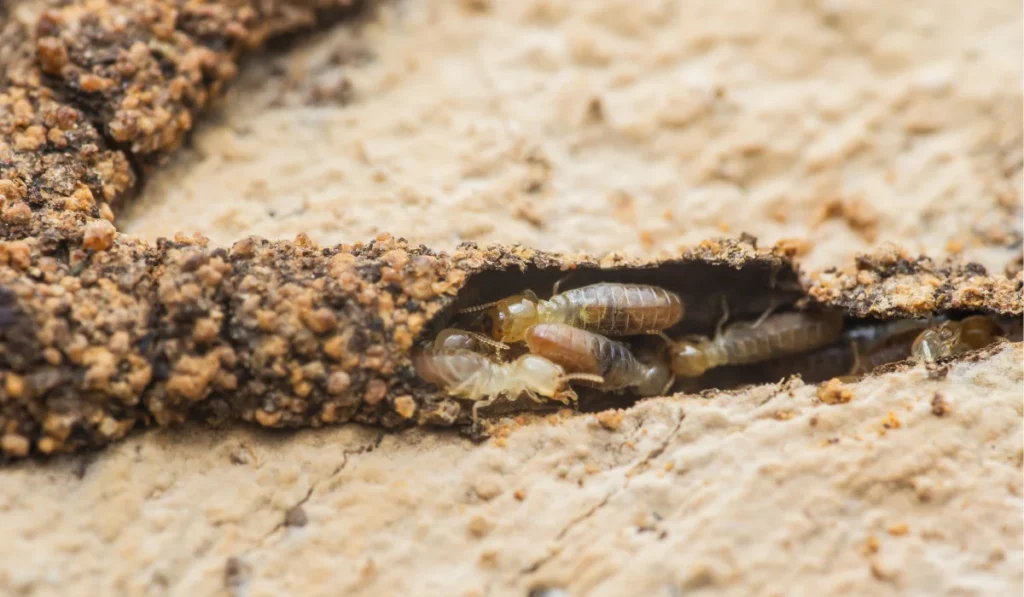
Damages woodStraight antennae, a thick body with no waist, and front and hind wings of equal size.
Where Near windows and lights after warm humid days, signaling a termite colony
Flying Ant
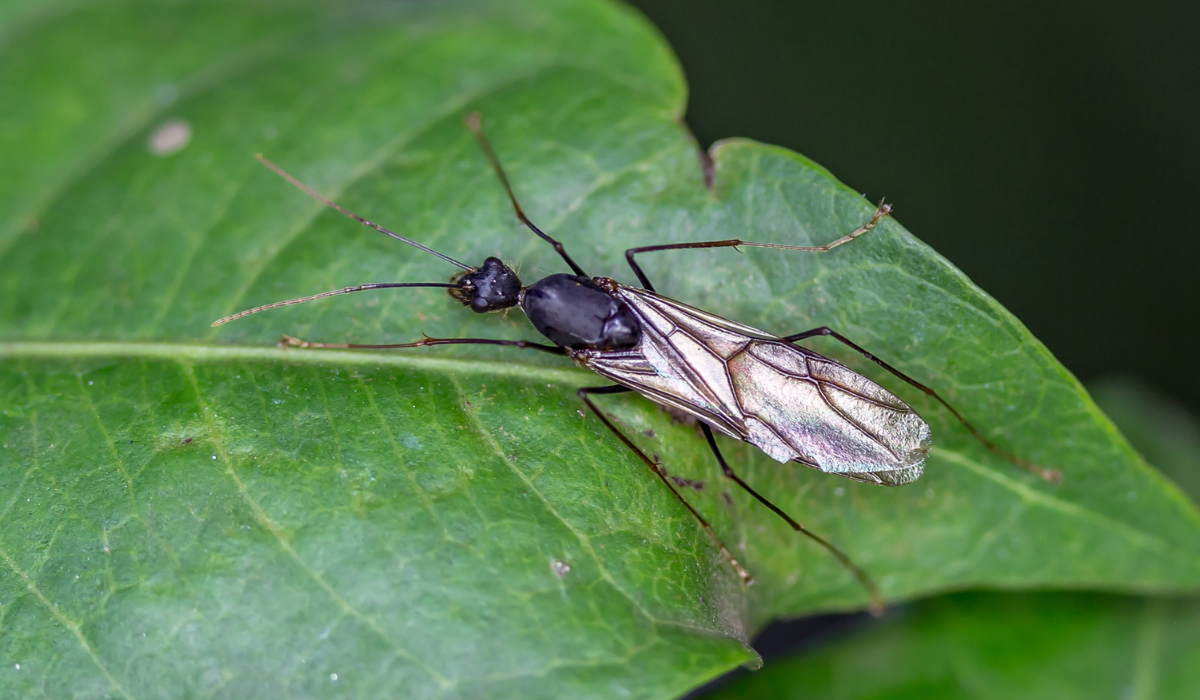
NuisanceBent antennae, a narrow pinched waist, and larger front wings.
Where Around lamps and windows during nuptial flights, pointing to a nearby colony
Many homeowners confuse flying ants with termites. The difference is important because a termite infestation requires immediate termite control.
Antennae Shape
Flying ants have bent antennae. Termites have straight antennae. This is one of the easiest ways to tell them apart.
Wing Size
Look at the wings closely. Flying ants have larger front wings and smaller hind wings. Termite swarmers have front and hind wings of equal size.
Body Shape
Flying ants have a narrow, pinched waist. Termites have a thicker, straight body. If you see black ants with a defined waist, they are likely flying ants and not termites.
If you are unsure, a pest control professional can inspect the insects and confirm the species of ant or termite.
What to Do When You See Them
Seeing flying ants does not always mean panic, but it does call for action.
Confirm the Identification
Misidentifying termites as flying ants can delay proper termite control. Exterminators can quickly inspect and identify swarmers.
Clean Up the Visible Ants
Vacuum visible flying ants and dispose of the bag. This removes immediate activity but does not address the source or the infestation. Avoid spraying random products indoors. Surface sprays rarely reach the main ant colonies.
Look for Signs of an Ant Nest
Check for sawdust, damaged wood, or small debris piles near windows, baseboards, and crevices. Carpenter ants often tunnel in moist wood and may push debris out of their galleries.
Contact a Pest Control Service
If activity continues, contact a pest control service. Professional ant control focuses on the colony, not just the swarmers. Targeted ant baits and treatment methods address the root of the ant infestation.
How to Prevent the Next Swarm
Preventing future swarms of flying ants starts with limiting access and moisture.
Seal Entry Points
Seal entry points around windows, doors, siding, and foundation cracks. Use caulk to close crevices where ants may enter.
Fix Moisture Issues
Repair roof leaks, plumbing issues, and drainage problems. Carpenter ants are drawn to damp wood. Removing moisture makes your home less attractive.
Store Food Properly
Keep pet food sealed and clean up crumbs quickly. Even black ants searching for food can establish satellite colonies indoors.
Use Professional Ant Control
Ongoing pest control services help monitor and treat developing pest problems before they grow. A pest control professional can use targeted treatments rather than heavy product use.
Schedule a Flying Ant Inspection in Michigan
If you are seeing flying ants in Michigan, especially in Ann Arbor or nearby communities, it is best to schedule an inspection. Pest Pros of Michigan provides professional ant and termite control services to identify pests and stop infestations at their source.
Our team focuses on safe, targeted pest control solutions that protect your property from further structural damage.
Contact us to schedule service and receive a free quote. Whether you are a homeowner or manage a commercial property, our pest control professionals are ready to help you get rid of flying ants the right way.
FAQs
Why do flying ants suddenly appear in my house?
Flying ants appear during their nuptial flight season when mature ant colonies release winged ants. If they show up indoors, there may be a nesting site inside your home.
Are flying ants as dangerous as termites?
Flying ants themselves are not as destructive as termites. However, carpenter ants can cause structural damage over time if left untreated.
How do I permanently get rid of flying ants?
To get rid of flying ants permanently, you must eliminate the ant colonies. A pest control service can inspect, identify the ant species, and apply targeted treatments to stop the infestation.

 Serving Michigan since 2018
 Pest-free guarantee
 Small, local business
 10+ years of pest control experience
 President and CEO of Pest Pros of Michigan
 Resident of Michigan